
Check it out here
Look, look: We Wrote a Book!
Yeah, I’m finally doing the damn thing.
This October, look out for the initial release of “A Practical Guide to Making VR That Changes the World,” coming via Apple Books. I’m shaking things up for my third book, based on learnings from my first two books (available on Amazon here and here); namely, that any writing about new technology gets dated very, very quickly. So rather than put out a book and call it a day, I’ll be building in public and adding new chapters to the book on a regular basis as the industry develops.
To tide you over until the book comes out, I’ll be releasing some new material every other week on this blog, as well as more information about how to order the book and a cover preview.
Chapter one: The 101 on 360
First things first — there is a lot of bad 360 video out there. Like, vomit-inducing bad. Like, quick MTV-style jump cuts that work great on flat screens but take users out of the immersive experience in 360. Like, boring and non-interactive (oh look, a 360 video of Paris. It’s pretty and interesting for all of 30 seconds). Like, who am I and what I am doing here and why is this in 360 bad. I could go on and on, but you get the gist.
The point is that just because you have the tools to make 360 video, that doesn’t mean you should. Think of VR like you think of social media — everyone can use it, but not everyone should, for every use case. As the space grows, we’ll likely see levels emerge, just as we have with social media. Big brands and companies will hire specialized agencies while individuals who just want to have fun and make content will be able to create on their own.
The absolute number one cardinal rule you should always remember as you may 360 VR is this: the camera is the user. Seriously, I would tattoo this on my forehead if it wouldn’t break my mother’s heart. No matter what, the user is part of the action, and they need to have a defined role. Do not put them in the position of being a wallflower who observes the action unless it is a deliberate narrative choice. Do not put them in an unnatural position (I once saw a corporate VR piece where the user sat in the middle of a conference table, an action that would surely get you fired in real life). Do not make the user ten feet tall or three feet tall unless it is part of the story (five foot six is an average height that mirrors normal human interaction).
The next section of the book is meant to help you get started in your thinking about 360 video. Think of it as a 101 level course that you take in college — you’ll get the fundamentals, but you’ll still need more learning and assistance to get to mastery. As you read, you’ll get some key definitions and tips, as well as things to watch out for and questions to ask yourself and your organization.
Catch Cortney at the Winning Women Series next week
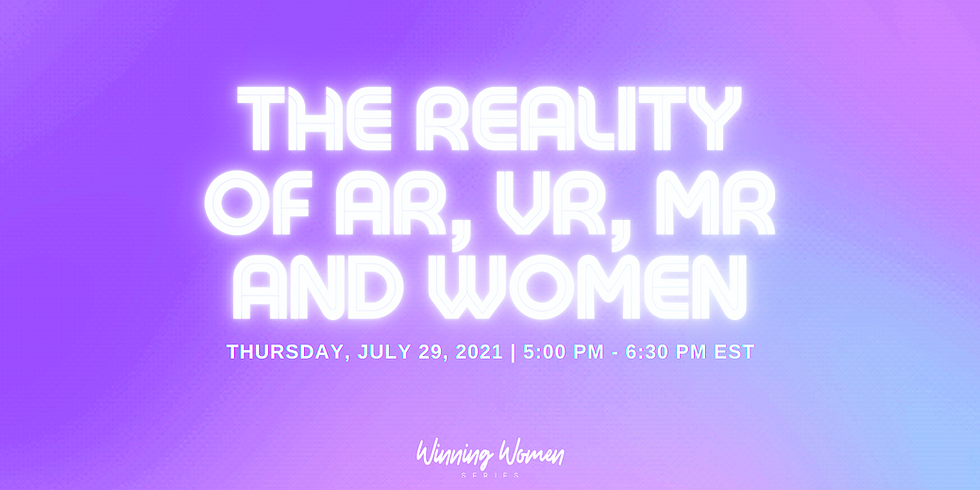
RSVP and get more detail here
How Custom VR Training Saves Your Organization Money
A few years ago, I was in a meeting with a client and she shared a competitor’s bid with me. For the same as it cost to create a custom VR piece, this company wanted to license a pre-created VR piece and charge a per seat fee -- meaning that as the piece succeeded and more people wanted to use it, the company would have to pay more. She was showing me this because she believed our fee had to be higher -- when I told her she could have her own custom piece to own free and clear for the same price, she couldn’t believe it.
The market is filling up with organizations that license off the shelf VR training content, and for some organizations, they make sense. An organization of less than a thousand people, for example, shouldn’t be paying for custom VR work -- even if everyone went through a piece a few times, it would still be cheaper than making something bespoke. But for organizations with thousands of employees, it makes sense to create a custom solution. Here’s the math:
Let’s say an organization spends $150,000 on a VR piece, which will get you something pretty solid. Add in an additional $25,000 for a fleet of headsets (and that’s at the high end). So you’re looking at a $175,000 total spend. If the organization has 2000 employees who use the piece, then you’re looking at less than $100 per use; if you go up to 3000, that’s just under $60 and so on, until you’re training massive amounts of people for not a lot of money. And the headset costs are fixed, so if you create more pieces, you get an even bigger bang for your buck.
Plus, you control the content. Check out some of the behind the scenes shots at the end of the post; they’re from a custom shoot we did for a client this weekend. The client collaborated with us on the script to make sure we were teaching exactly what they wanted employees to learn, and we shot in one of their locations and used their branding. That resonates with employees far more than something generic.
“But Cortney!” you might say, “what about avatar programs where I can just swap in new scripts? Isn’t that cheaper than a shoot?”
Well...no. First off, you’re still going to pay a licensing and per seat fee for those programs. Secondly, swapping in scripts isn’t all that easy and it still requires hiring voice actors, unless you want everyone to sound like a robot. And third, talking to a videogame character versus talking to an actual person? Which do you think has a greater emotional impact?
If you want to start making great custom VR training content that reflects your organization’s values and priorities, drop us a line!
Cortney will be speaking at Amsterdam Dance Event in October!

Learn more here
In New York for Tribeca this weekend?

We are proud to once again co-host the invite-only Madwomen breakfast for leading women in entertainment on Saturday, June 12. We are also taking meeting throughout the week; drop us a line if you want to connect.
Cortney wrote about VR and equitable hiring for Recruiting Daily

Give it a read here
Our case studies are featured in a great new book!
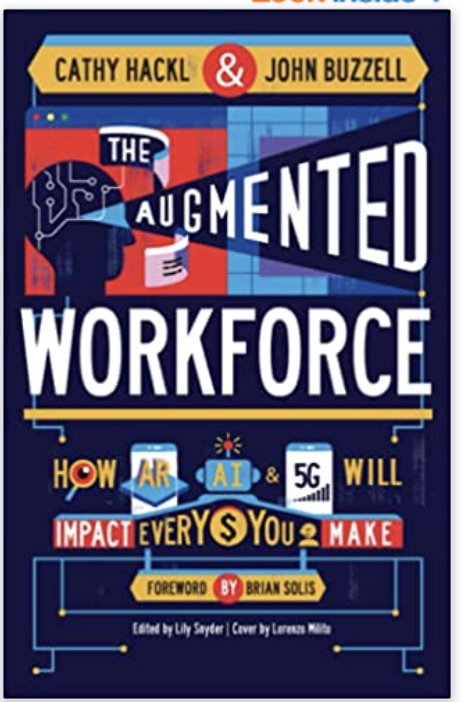
Order it here
Check out Cortney opening for Carole Baskin at the VRARA conference!

Get your tickets here
Why The Quest Will be the Blackberry of VR

Learn more here
Cortney will be speaking at ARVR Innovate this week

Check it out here
Cortney chatted about VR and the future of work at Advertising Week Europe
Check out the panel when it airs on May 12

How It Started/How It's Going: Observations from Five Years in VR

It’s been five years since Cortney started working in VR, and she has some thoughts
Our Director of Ideation Pamela Jaber Was Interviewed by Authority Magazine

Read what she had to say here
Our Founder Cortney Was Interviewed by Authority Magazine

Check out what she had to say here
Why VR Works for Bystander Intervention Training

Are you as upset by recent attacks on the AAPI community as we are? Click here to read about how VR can be used for bystander intervention training to prevent these awful incidents.
Cortney Chatted With Thrive Global About the Ups and Downs of Founder Life

Read the full piece here
The Surprising Technology That Can Make Your Organization Truly Inclusive

Diversity and inclusion extends beyond hiring to training and education as well. VR lets people who are otherwise not well served by current training modalities have an equal chance to succeed. Read more here
See Cortney Speak at the ABA Conference in April

Want to learn more about VR applications in the legal field? Check out Cortney’s panel on April 16
The Five Biggest Mistakes People Make When Creating VR for Training

If you’re going to put the time and energy into making VR, at least do it right. Learn more here